
By our Reporter.

As the 2026 long-rains planting season progresses, farmers in Plateau State continue tending to their crops on the field say their first concern is not politics but survival. They watch the hills before heading to their farms, aware that another attack could send them fleeing again.
In Jos, traders in Terminus Market complain that rising transport costs and inflation have made everyday business harder, while civil servants speak quietly about shifting loyalties, appointments and the next round of political manoeuvring.
For many residents, governance is felt less in speeches than in whether roads are passable, schools function, hospitals have supplies and security agents arrive in time.
Yet inside Plateau’s political establishment, attention has increasingly shifted away from those pressures toward a more familiar contest for influence.
As the 2027 elections draw closer, party officials, lawmakers, government insiders, political analysts and civil society actors point to deepening divisions within the state’s ruling political structure over Governor Caleb Manasseh Mutfwang’s future and the balance of power around him.
A victory that did not end the contest
When Governor Mutfwang won the APC governorship ticket, many party members expected the primary to settle old rivalries and open the way for a more united political front. Instead, the contest appears to have shifted into a different phase.
Rather than ending internal competition, the primary victory sharpened it.
Supporters of the governor say his rise within the APC gave him formal authority but also unsettled older networks that had long shaped the party’s structure in Plateau. Those networks, according to political observers, are now exerting influence through local ward leaders, delegate blocs, legislative alliances and access to patronage.
That struggle has given the state a familiar but dangerous pattern. The election may be over, but the battle for control has not.
The competing centres of power
Plateau politics has historically revolved around competing centres of influence rather than party discipline alone. That reality remains visible today.
Governor Mutfwang’s supporters say he has moved to consolidate authority after years of political fragmentation and institutional strain. Critics, however, argue that his administration has moved too aggressively to reset the state’s political order and sideline figures linked to previous arrangements.
Among the figures widely seen as influential are APC National Chairman Prof. Nentawe Goshwe Yilwatda, former Governor Simon Bako Lalong and federal lawmaker Yusuf Adamu Gagdi. Each commands a different kind of influence, shaped by geography, history, personal alliances and access to party machinery.
The contest is not only about personalities. It is about who shapes the delegate list, who influences appointments, who controls local structures and who can translate political loyalty into electoral advantage when the 2027 Nigeria General Elections arrive.
That is why the current dispute feels larger than a party disagreement. It has become a contest over the future shape of Plateau politics itself.
Governance versus politics

Several supporters of Governor Mutfwang allege that political opponents have intensified efforts to portray the administration as underperforming.
Claims circulating publicly include criticism of the government’s handling of security, education, the economy, appointments and infrastructure. Some of these accusations appear repeatedly in speeches, social media posts and party conversations.
None of those claims could be independently verified for this report, and individuals associated with the political bloc often referred to as the ‘Legacy Group’ did not respond to requests for comment.
Still, the pattern is clear. Criticism of performance has become a political weapon in Plateau State. Supporters of the governor say the aim is to weaken his standing before the next election cycle. Opponents say the criticism reflects genuine frustration with how the state is being governed.
Between those two positions lies a more important question. What can be proven, and what is simply political noise?
What the administration has actually done
Official Plateau State budget documents suggest a state trying to convert revenue into visible progress while facing major constraints.
The state’s 2024 final budget stood at about N354.35 billion. Total revenue, including opening balance, reached N265.79 billion by year end. FAAC receipts totalled N195.35 billion, or 102.3 percent of target, while capital expenditure came to N32.68 billion, representing 29.5 percent of the final budget.
Those figures suggest that Plateau has been able to generate revenue, but not yet translate it into the pace of infrastructure delivery expected by many residents.
The government has highlighted work across several sectors, including roads, hospitality assets, water systems, energy and urban renewal. Public materials and official reports point to projects involving roads, the Jos Township Stadium, Hill Station Hotel, Plateau Hotel and solar energy initiatives, as well as broader efforts to revive abandoned projects inherited by the administration.
Supporters argue that these efforts should be viewed against a difficult fiscal backdrop. Critics say the projects are too slow, too selective or too disconnected from the urgent needs of rural communities.
The numbers may not settle the argument, but they do show why the politics of performance has become so central.
The security reality
The deeper story in Plateau is not found in party offices but in the communities living with repeated attacks and displacement.
Media reports in June 2026 that 20 people were killed in an attack in Bokkos with many other deadly attacks documented in different communities and LGAs till date; underscoring the scale of insecurity in Plateau state. For many farming communities, violence has become part of the calculation behind every planting season, every market trip and every school term.
This is the part of the story international audiences tend to understand most quickly, because it cuts to the human cost of political instability.
In Barkin Ladi, Bokkos, Mangu, Kanam, Jos or Wase, farmers say relief materials do not replace safety. In Jos, churches and community leaders speak of repeated funerals and the strain on families forced to move from one uncertain place to another. Traditional rulers warn that insecurity is eroding trust and disrupting daily life. Civil society groups say the political class is talking past the people.
The gap between political debate and lived reality is widening.
Why the rift matters
Internal political conflict rarely stays inside the party.
It can delay projects, unsettle investors, strain relations in the legislature and make long term planning harder for the civil service. It can also create policy uncertainty, especially when key actors spend more time defending their positions than focusing on governance.
In Plateau, that risk is serious. The state is already dealing with insecurity, weak infrastructure, economic pressure and public frustration. A ruling party divided by suspicion and competing ambitions could find it harder to coordinate effectively, even on basic issues.
For residents, that means the fight for 2027 is not just about who wins power. It is about whether political competition strengthens the state or drains attention from the challenges people face every day.
What both sides say
The governor’s office says Plateau inherited severe financial strain and that some tough decisions, including reversals of appointments and administrative changes, were necessary to protect the state’s resources and restore order to public service.
Party figures associated with the older power structure argue that the APC cannot build a durable future if it ignores those who helped shape its original base. They say the party needs inclusion, not concentration of power.
Civil society actors are more blunt. They say Plateau’s political class is now spending too much energy on succession politics and too little on service delivery.
Political scientists and election observers warn that the state risks entering the 2027 cycle with internal fractures that could affect both campaign strategy and governance. They say the real test will not be who dominates the party today, but whether the party can prevent its divisions from becoming a public burden tomorrow.
Beyond 2027
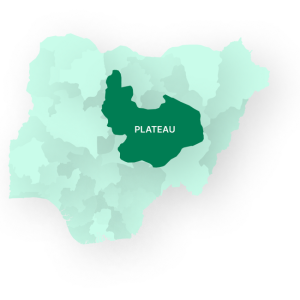
For the traders in Jos and the farmers in Bokkos, the approaching election is not a debate about factional labels or delegate arithmetic. It is a question of whether political competition will improve their lives or interrupt them again.
As evening falls across Plateau, traders close their stalls and farmers leave their fields early, mindful of distance, road conditions and security. In Government House and party offices, strategists continue to calculate alliances and loyalties. But outside those rooms, most people are thinking about simpler things. Safety. Food. Work. School. Water.
Whether Plateau’s political class can put those priorities first may determine not only the outcome of the 2027 elections, but the pace of governance in one of Nigeria’s most politically sensitive states.

60: 40 Power-Sharing Rift Escalates: Festus Fwanter Hits Back at Governor Mutfwang Over comment